RangSutra: a digital rangoli studio with radial symmetry, powder textures and tradition presets
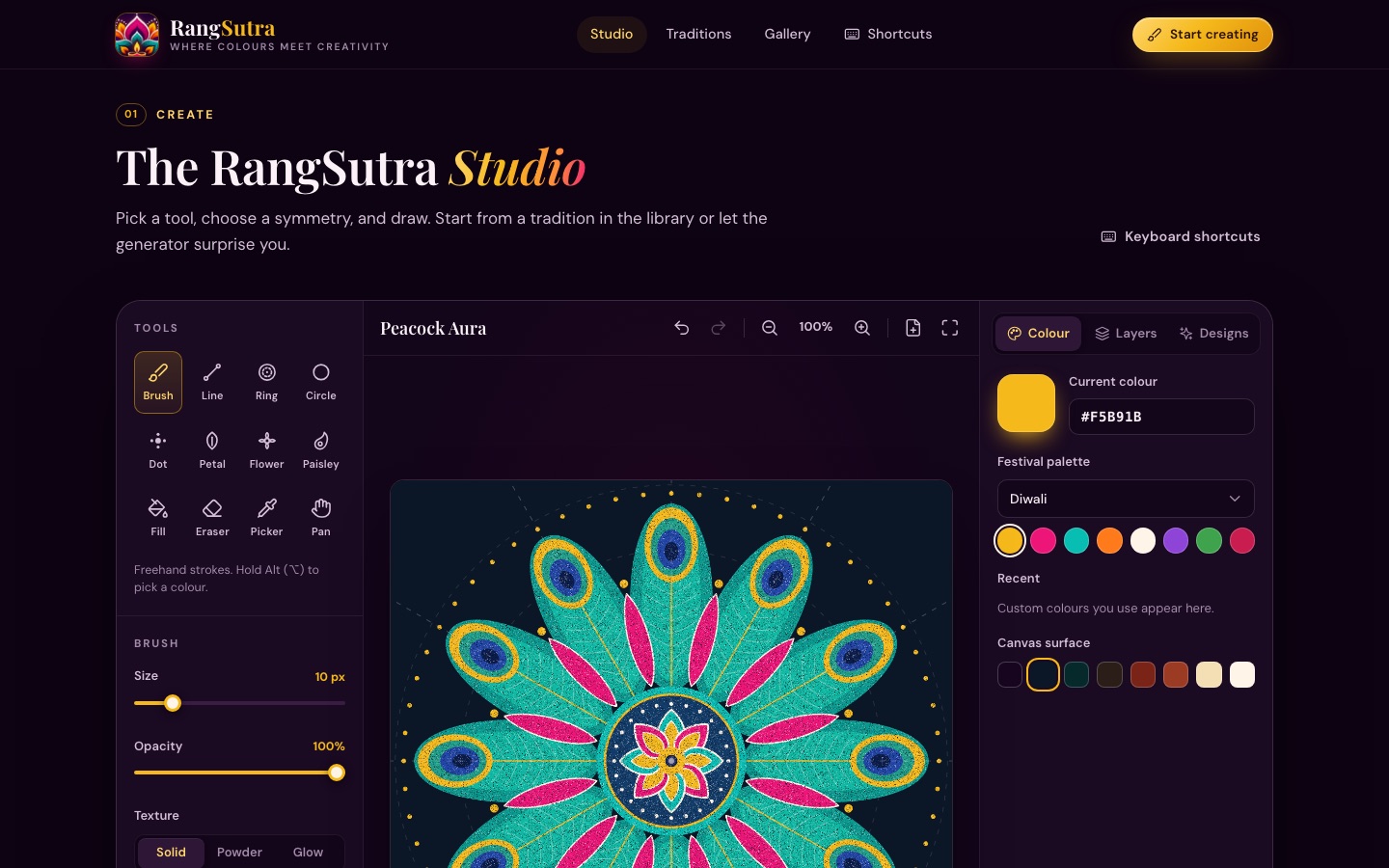
A premium, Indian-art themed studio for designing rangoli in the browser — radial symmetry up to 24-fold, sifted-powder textures, petal and paisley motifs, layers and a personal gallery, built with Flask and vanilla JavaScript.
My role. Full-stack developer, 2026. The project is complete and documented below.
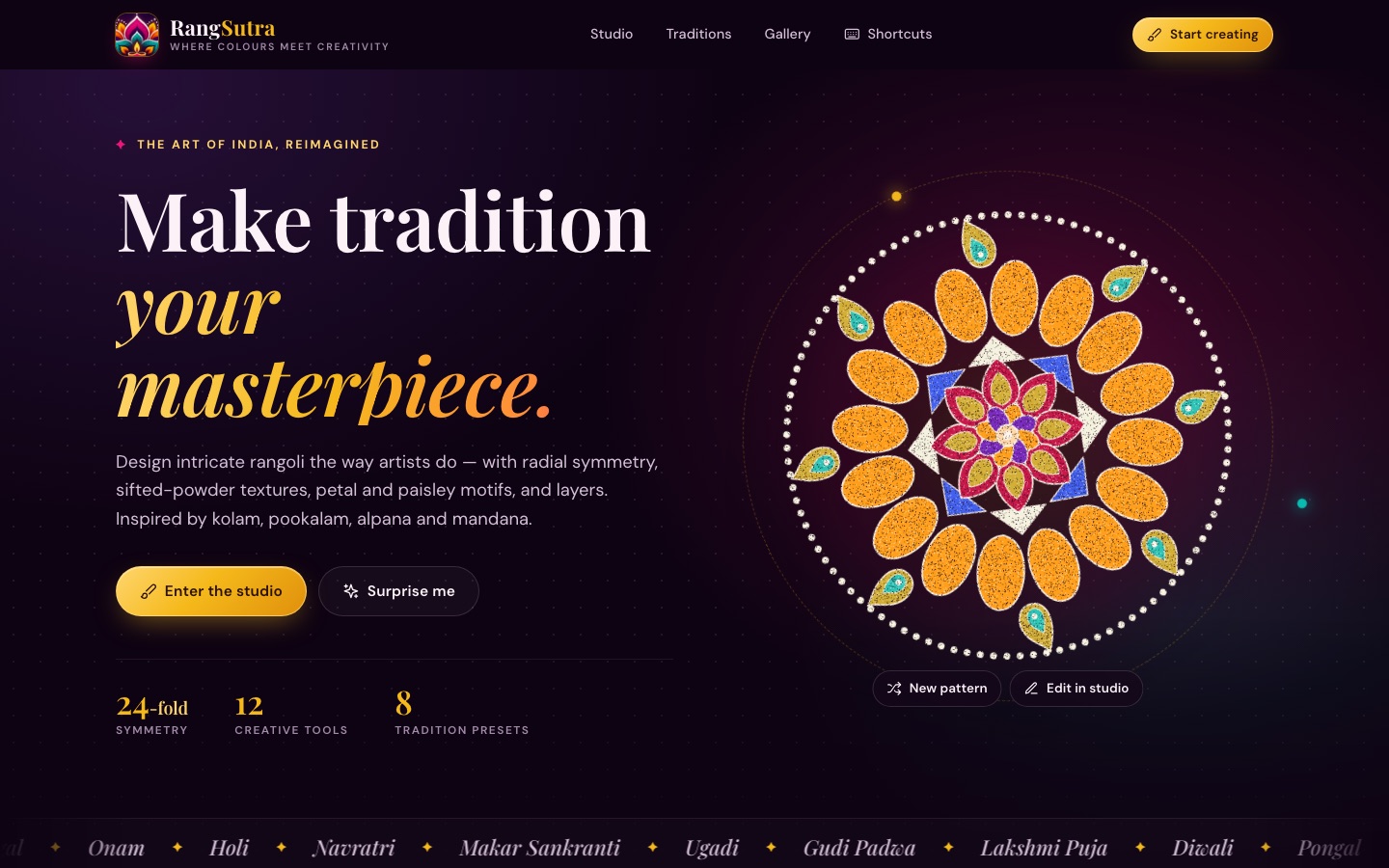
Rangoli’s intricate radial symmetry is slow to sketch digitally: ordinary drawing tools make you repeat every stroke by hand around a centre point.
A studio where each stroke is mirrored up to 24 times, with traditional motifs, festival palettes and eight tradition presets — and designs that can be saved, reopened and exported.
Key features
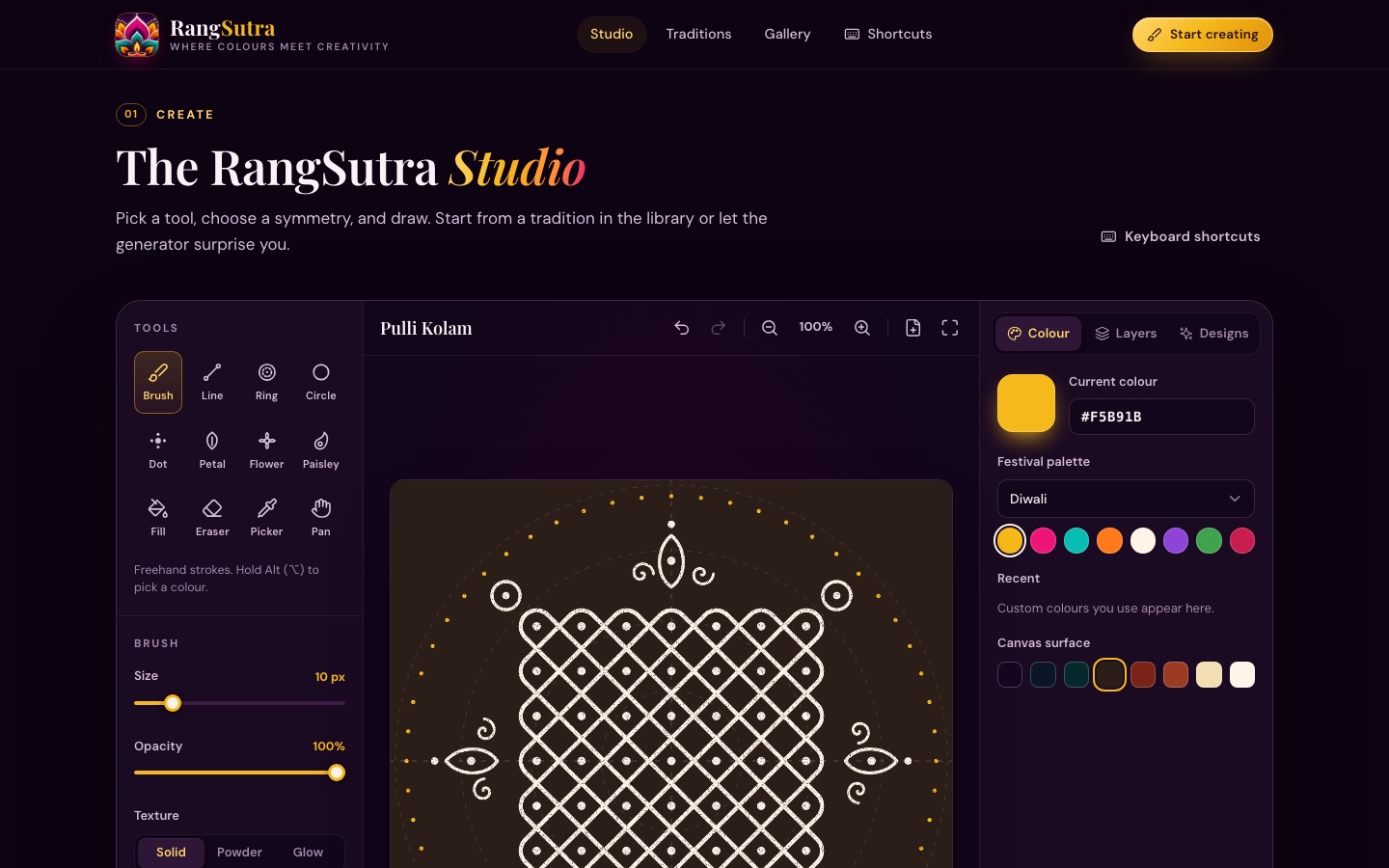
- 0112 tools: brush, ring, petal, flower, paisley, fill and more
- 02Radial symmetry up to 24-fold plus mirror/kaleidoscope mode
- 03Powder and glow brush textures with festival colour palettes
- 048 layers, 30-step undo/redo, zoom and pan
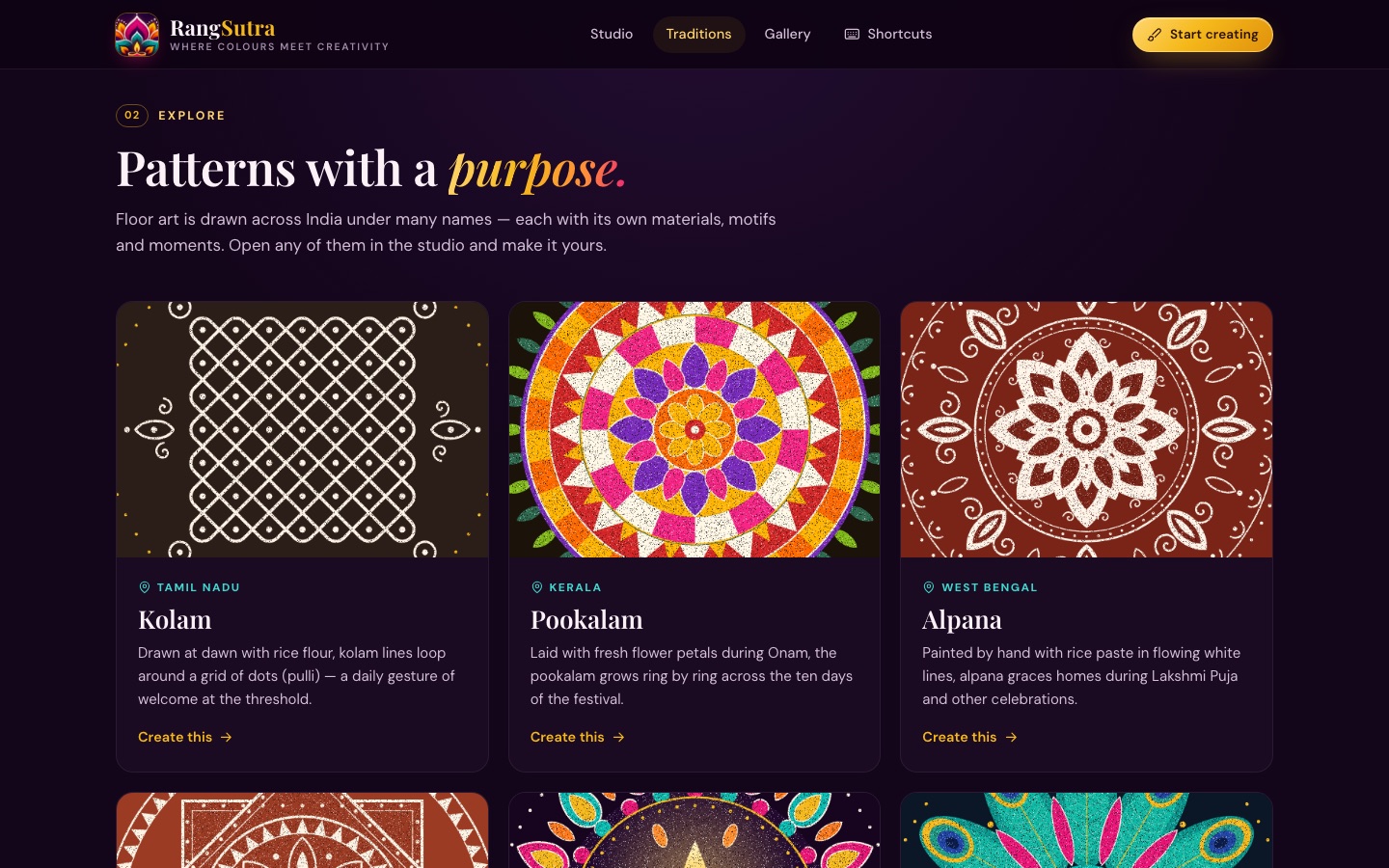
- 058 tradition presets (Kolam, Pookalam, Alpana, Peacock…) and a “Surprise me” generator
- 06Gallery with search and favourites; export PNG, HD PNG and JPG
The constraint#
Rangoli and kolam are built from repeated motifs arranged with precise radial symmetry. Drawing one digitally with a normal paint tool means repeating every curve by hand — slow, and never quite symmetric.
What I built#
A browser studio with a Flask backend and a vanilla JavaScript front end (no build step).
- Symmetry engine. Every stroke is rotated into 4 to 24 segments, with an optional mirror for kaleidoscope patterns; motif stamps always face outward from the centre.
- Real materials. Sifted-powder and glow brush textures, festival palettes and canvas surfaces give the look of floor art.
- Serious editing. Up to 8 layers, 30-step undo/redo, zoom, pan, focus mode and keyboard shortcuts.
- Traditions & gallery. Eight hand-built presets (Kolam, Pookalam, Alpana, Mandana, Peacock…), a seeded generator, and a gallery to save, reopen and export designs.
What was hard#
- Natural strokes. Raw pointer input is jagged; smoothing points before rendering made lines feel hand-drawn.
- Performance. Drawing many mirrored copies per stroke, across layers, needs careful redraws to stay responsive.
What I’d do differently#
Add a public gallery so people can share and remix each other’s designs.
Screenshots