SkillOrbit: discover skills, build careers — AI career intelligence and job matching
A career intelligence platform that compares a learner’s skills with 26 tech, business and creative careers, shows exactly what to learn next and matches them with real jobs posted today.
My role. Full-stack developer, 2026. The project is complete and documented below.
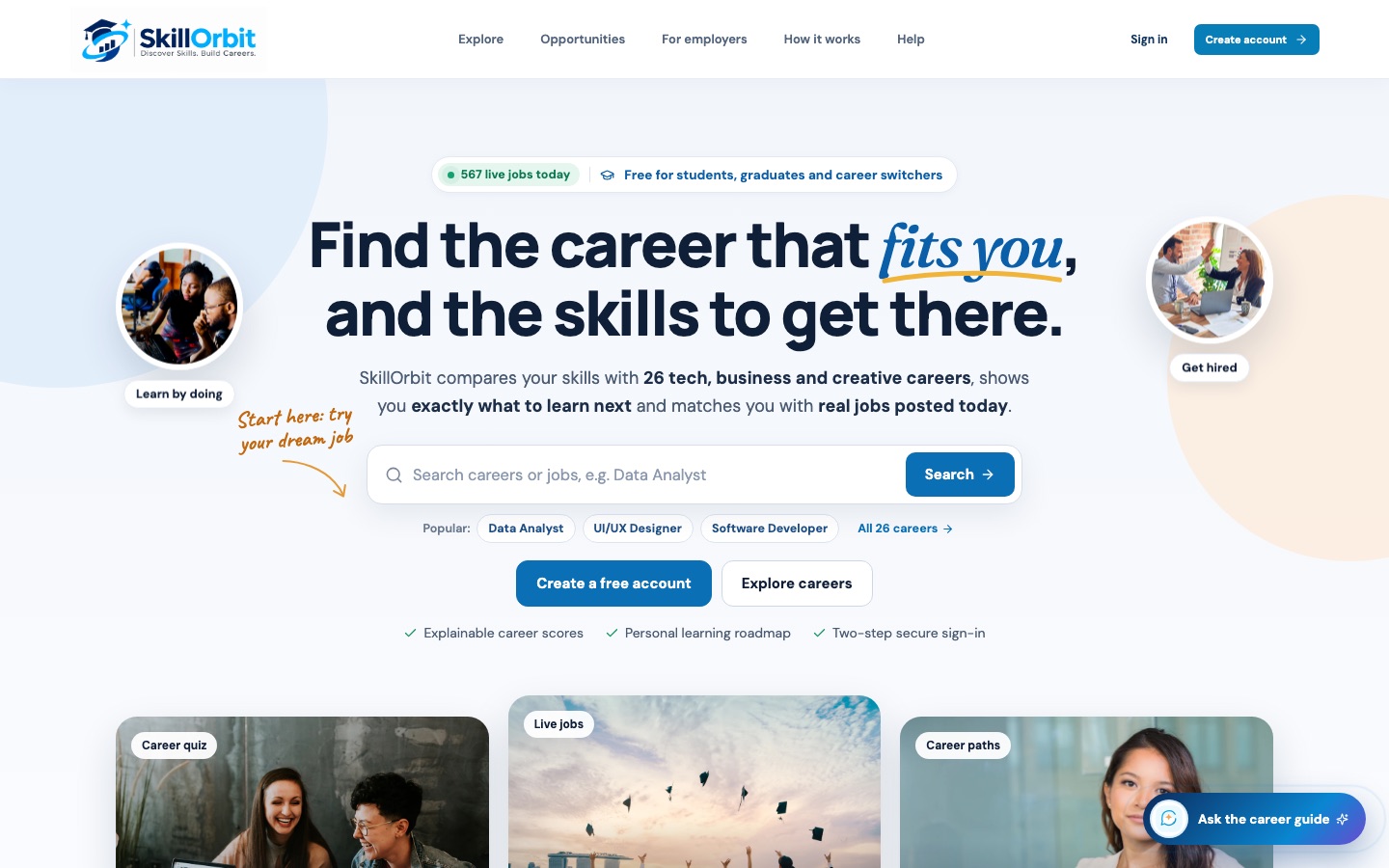
Students and career switchers don’t know which career fits them, which skills they are missing, or which open roles they could realistically apply for today.
A single platform that scores career fit, shows skill gaps with learning paths, and matches people with live jobs — backed by an explainable ML service and a Gemini-powered career guide.
Key features
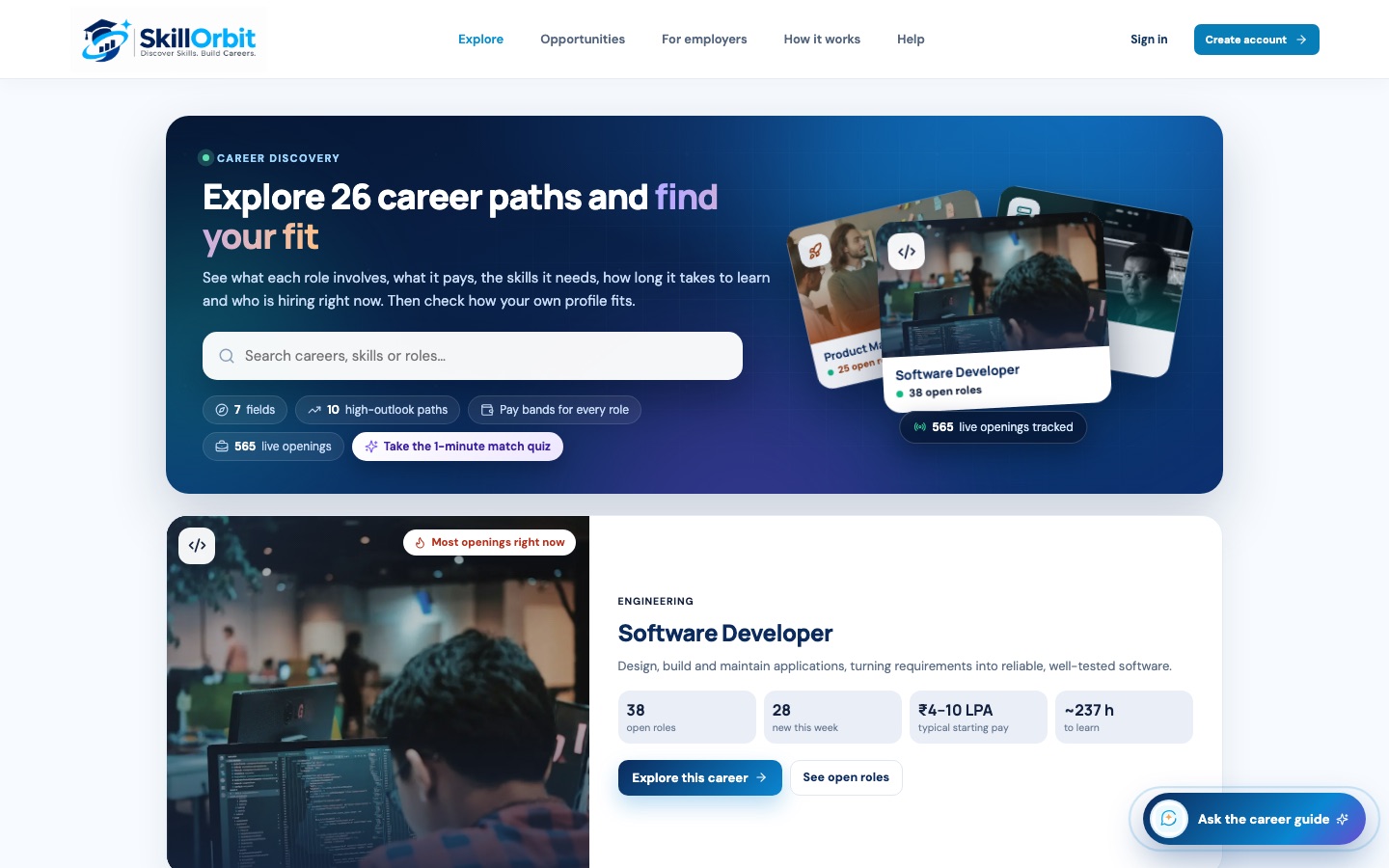
- 01Explore 26 careers with pay bands, demand and time to learn
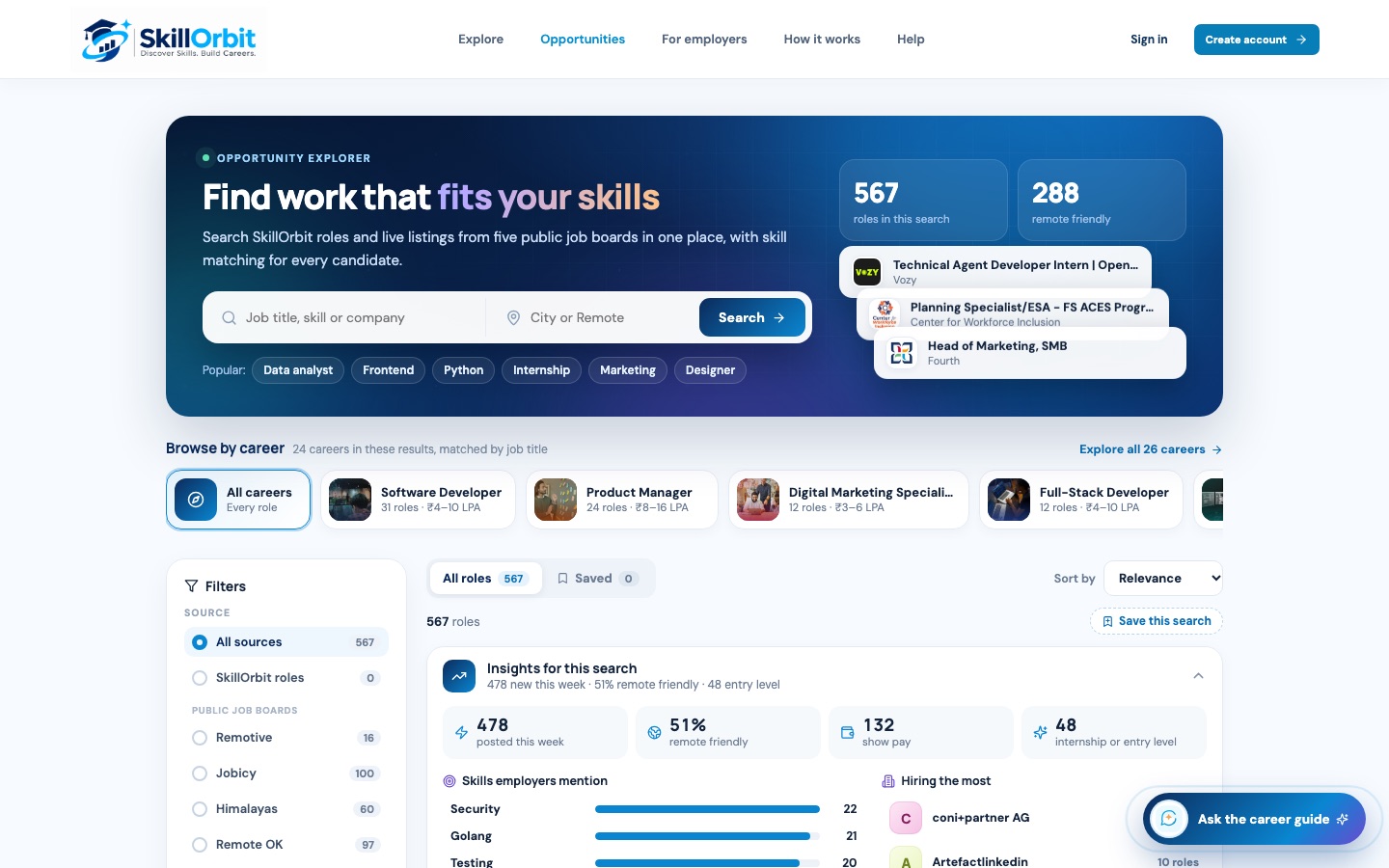
- 02Live jobs from SkillOrbit employers and public job boards
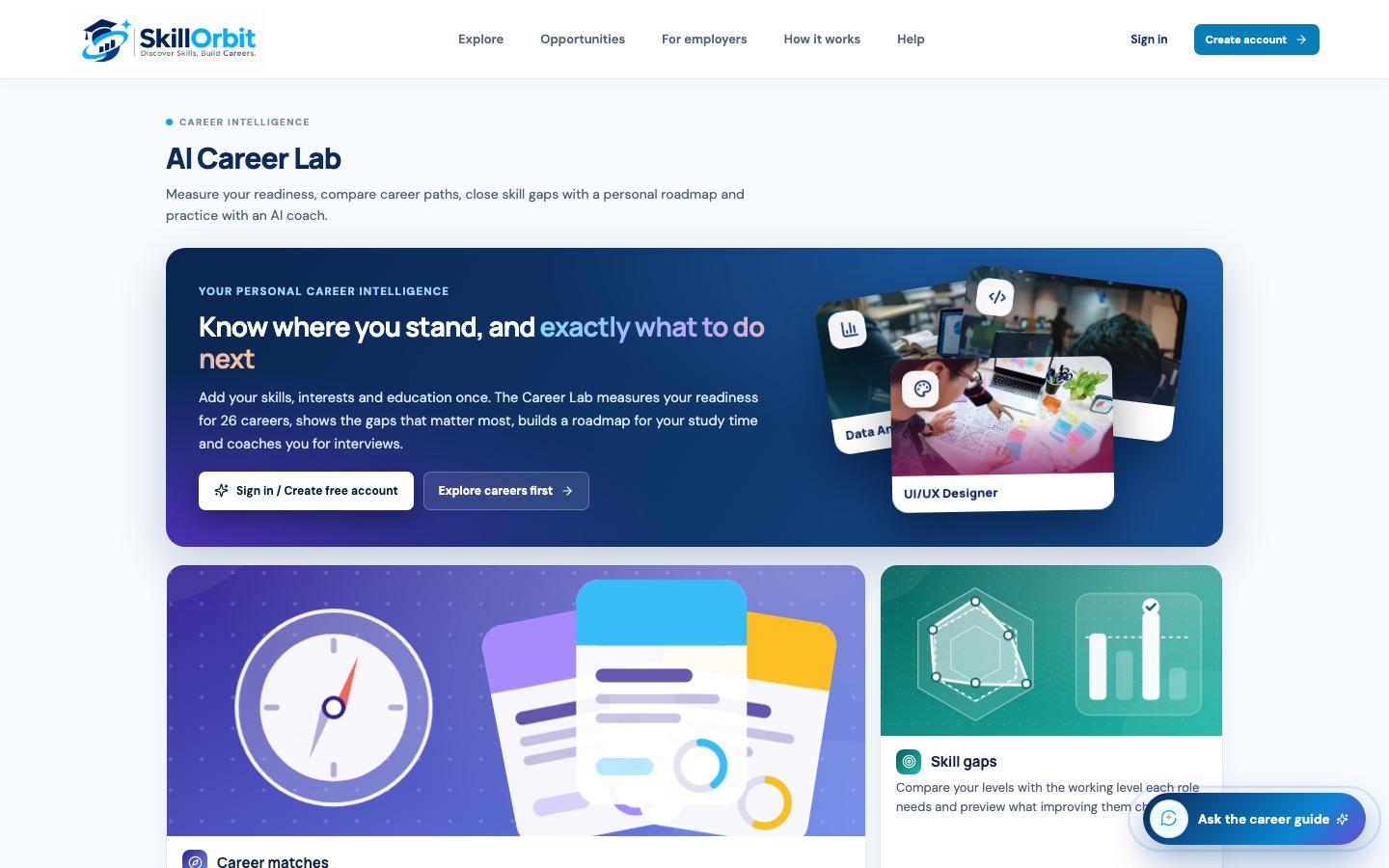
- 03AI Career Lab: readiness score, skill radar and skill-gap analysis
- 0418 learning paths with progress, streaks and a study planner
- 05Project portfolio with GitHub import and code insights
- 06Community, private messages and two-step secure sign-in
The constraint#
Career advice for students is usually generic. Learners can’t easily see which careers fit their skills, what they still need to learn, or which real jobs they could apply for today — and that information is scattered across job boards, courses and forums.
What I built#
A full-stack platform with a React + TypeScript front end, an Express API on MongoDB, and a Python FastAPI service for matching.
- Explore careers. 26 careers across tech, business and creative fields with pay bands, demand, open roles and a one-minute match quiz.
- Jobs. SkillOrbit roles plus live listings from public job boards, with explainable match scores.
- AI Career Lab. A readiness score for a target career, a skill radar and skill-gap analysis that feeds learning recommendations.
- Learning paths. 18 paths with progress, streaks, a study planner and AI knowledge checks.
- Projects & community. Upload or import projects from GitHub for code insights, plus a members-only community and private messages.
What was hard#
- Explainable matching. A score alone doesn’t help; showing which skills drive a match makes it actionable.
- Account security. Two-step sign-in with emailed codes, verification and sign-in history without making sign-in painful.
What I’d do differently#
Add more evaluation for match quality, with sample profiles and expected results, so model changes can be measured.
Screenshots