SkillOrbitLab: a full-stack agency website with its own API and admin panel for content and leads
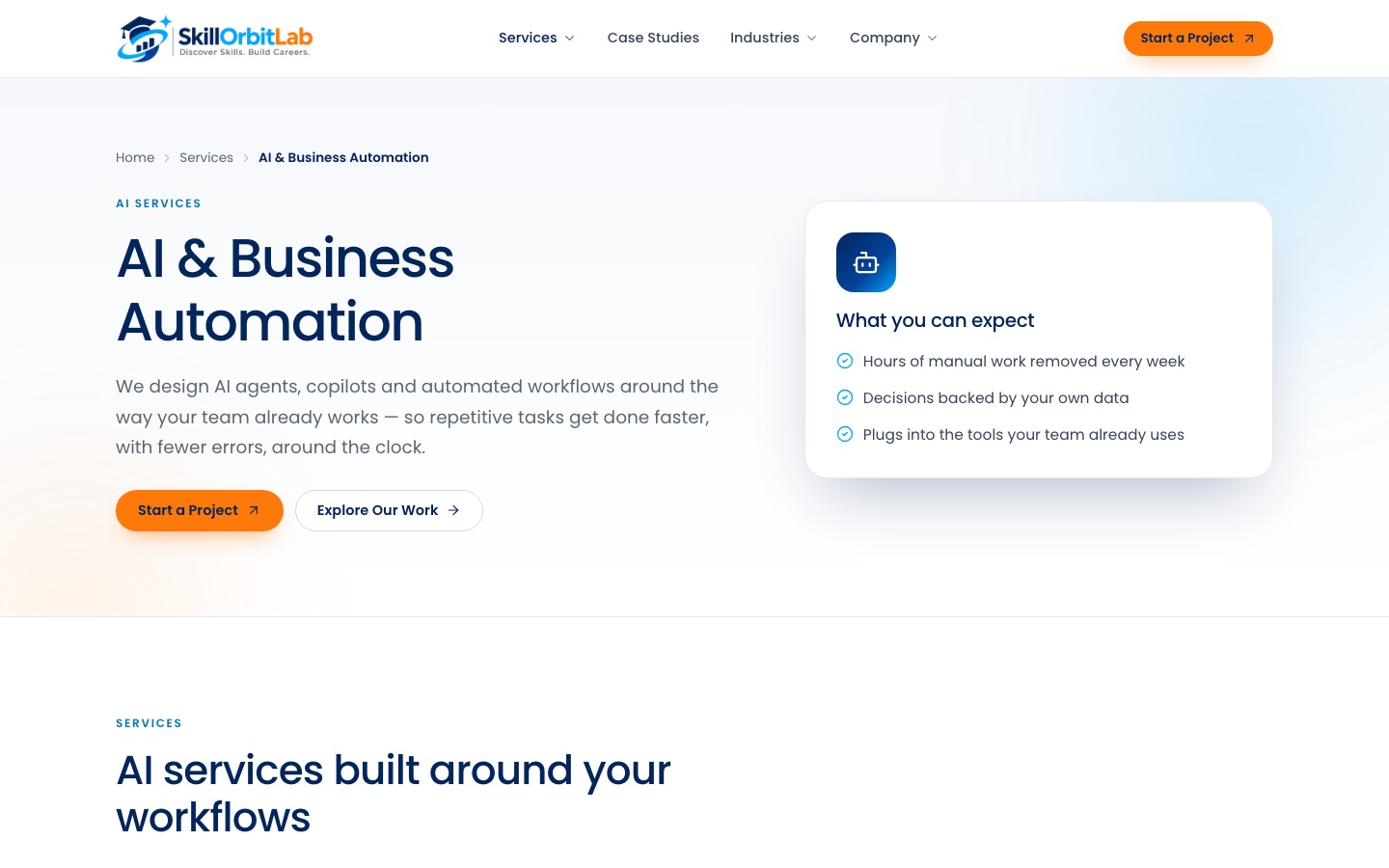
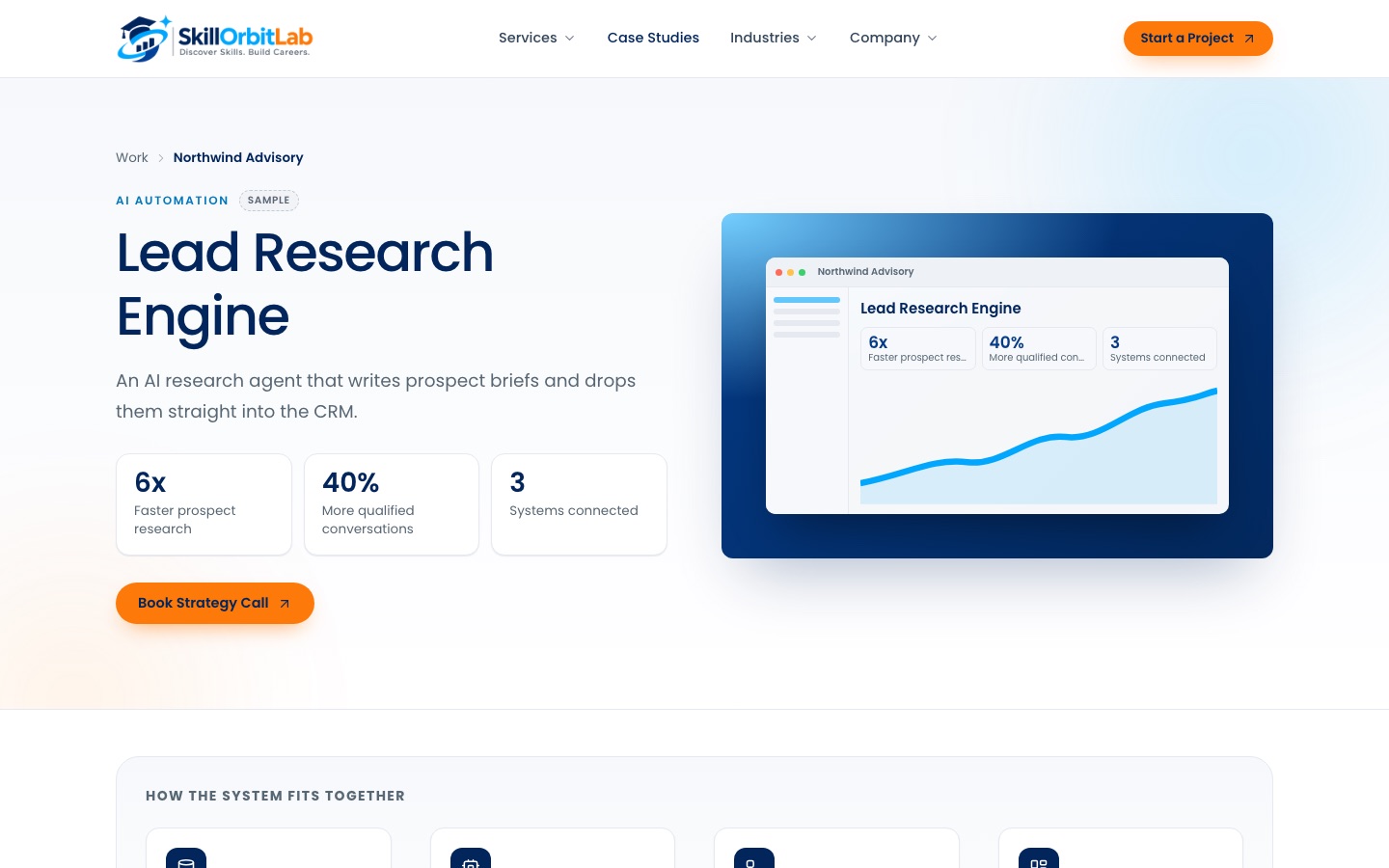
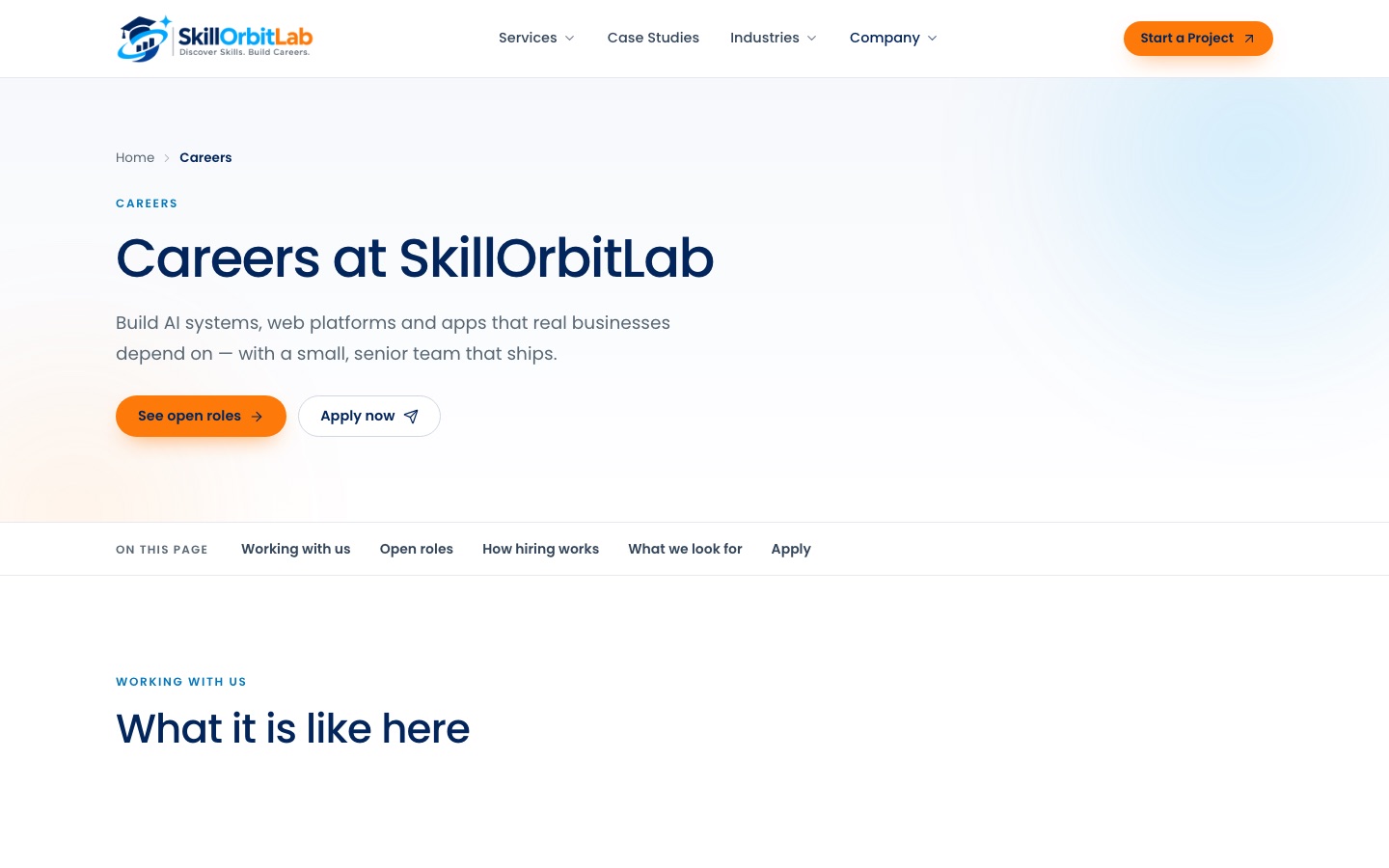
A full-stack website for an AI and software agency: a React marketing site with 28 service pages, case studies, a blog and careers, backed by an Express + MongoDB API and a separate React admin panel for editing content and handling enquiries and job applications.
My role. Full-stack developer, 2026. The project is complete and documented below.
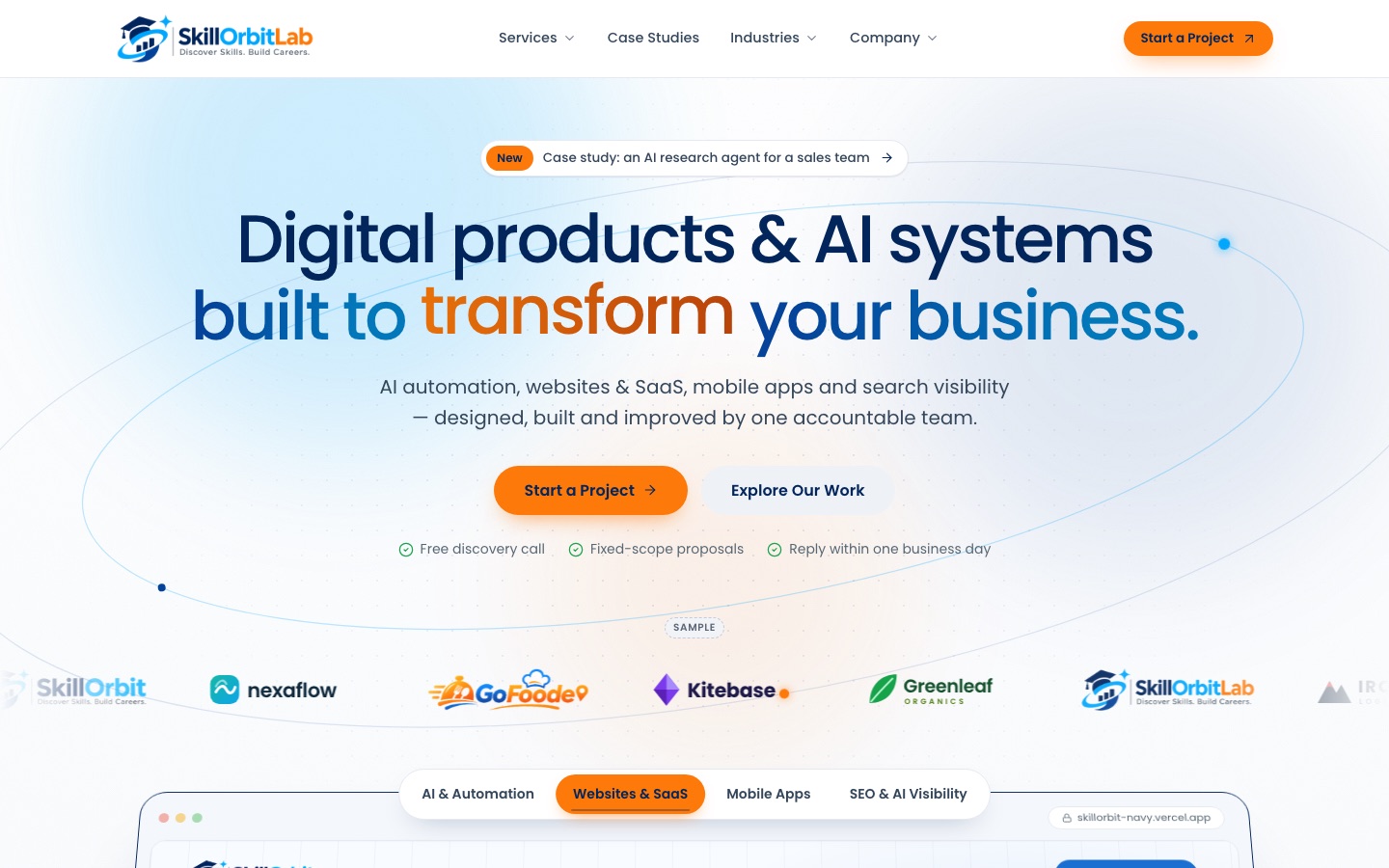
An agency website has to win trust and turn visitors into enquiries, but most are static brochures: content changes need a developer, and leads and CVs end up scattered across email inboxes.
A fast, SEO-ready site that the team can update from an admin panel, with validated lead and application forms that land in searchable inboxes with statuses, notes and CSV export.
Key features
- 0128 service pages from one data-driven template, with a tabbed mega menu
- 02Case studies with metric tiles and architecture flow diagrams
- 03Blog with categories, table of contents and related posts
- 04Careers with role pages and a CV-upload application form
- 05Admin panel: enquiry and application inboxes, CSV export and content editors
- 06Per-page SEO, JSON-LD structured data and a generated sitemap
The constraint#
An agency site has two jobs: explain a wide range of services clearly enough to earn trust, and turn that trust into enquiries the team can actually follow up. Static brochure sites fail the second job — every copy change needs a developer, and enquiries and CVs get lost in email.
What I built#
A monorepo with three apps that share one REST API.
- Marketing site (React + Vite). A tabbed services mega menu, an animated AI-workflow hero, 28 service pages generated from one data-driven template, industry pages, case studies with metric tiles and architecture diagrams, a blog, FAQs and careers.
- API (Express + MongoDB). Persists case studies, posts, roles, FAQs, testimonials, enquiries and applications, with Zod-validated forms, a honeypot spam trap, rate limiting and optional SMTP notifications.
- Admin panel (React). JWT sign-in, a dashboard with counters and recent activity, inboxes for enquiries and applications (status tabs, search, notes, CV download, CSV export) and editors for every content type.
- SEO built in. Per-page titles, canonical URLs, Open Graph tags, JSON-LD for the organisation, FAQs, articles and breadcrumbs, plus a generated sitemap.
What was hard#
- 28 pages without 28 templates. Four service categories with six sub-services each are rendered from one template and a single data file, so adding a service is a data change, not new code.
- Forms that resist spam but stay friendly. Server-side validation returns field-level errors, while the honeypot, rate limits and CV content-type checks block abuse without a CAPTCHA.
- Working without the API. The site falls back to bundled content when the API is unreachable, so pages never render empty.
What I’d do differently#
Move CV uploads to object storage from the start, and replace the clearly labelled sample case studies and testimonials with real client work as it ships.
Screenshots