VisionCart AI: point your camera at anything — real-time product and object recognition in the browser
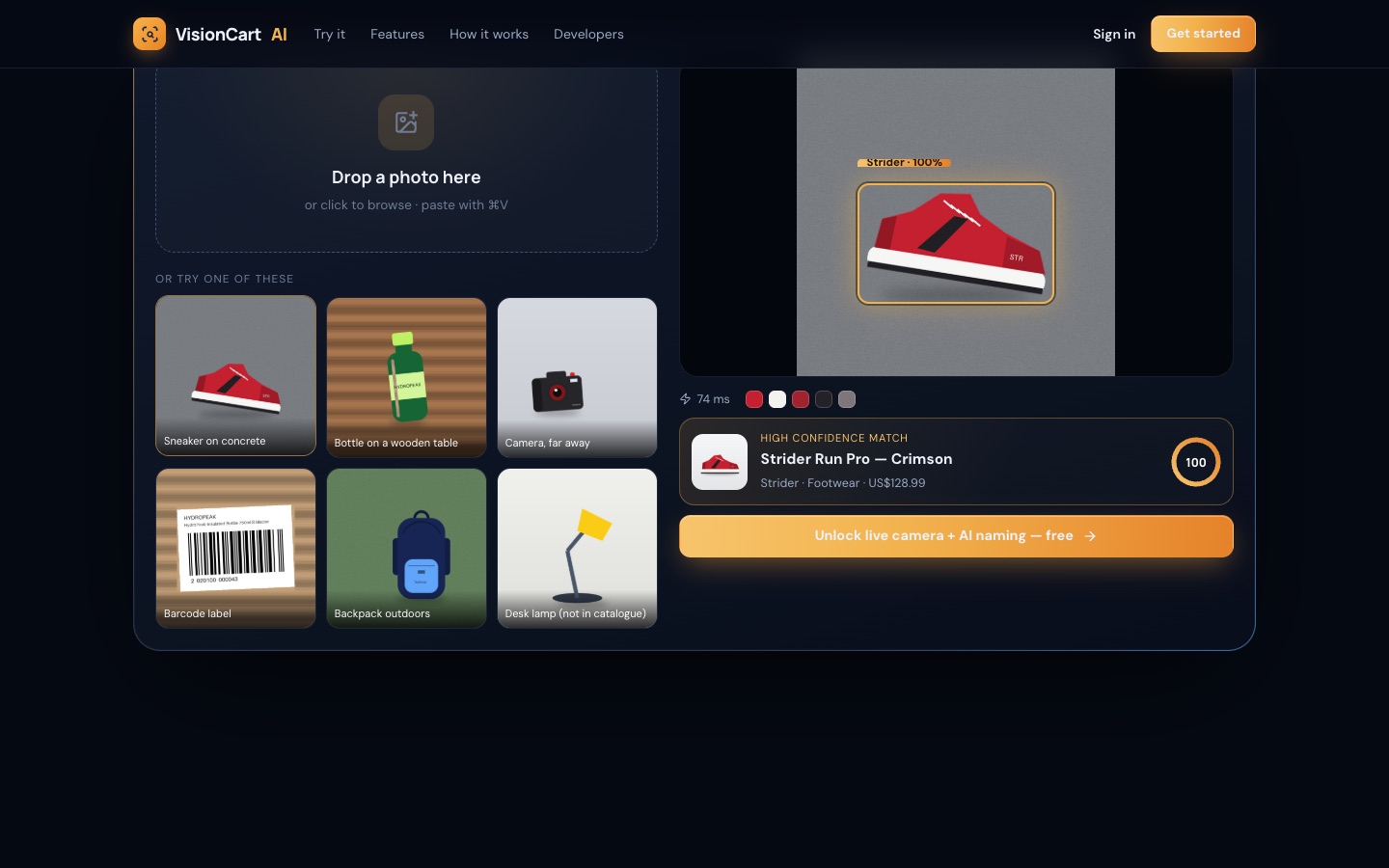
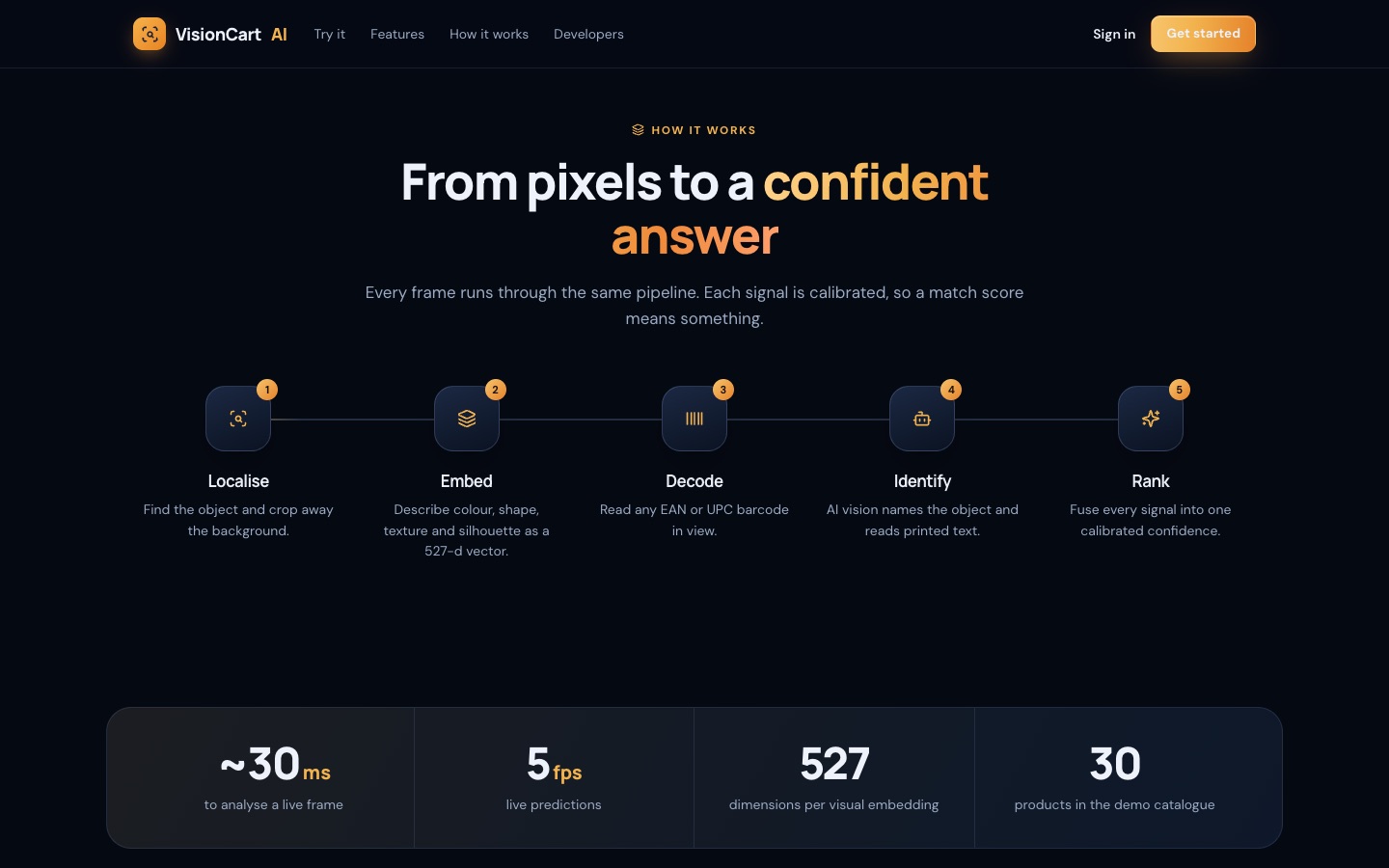
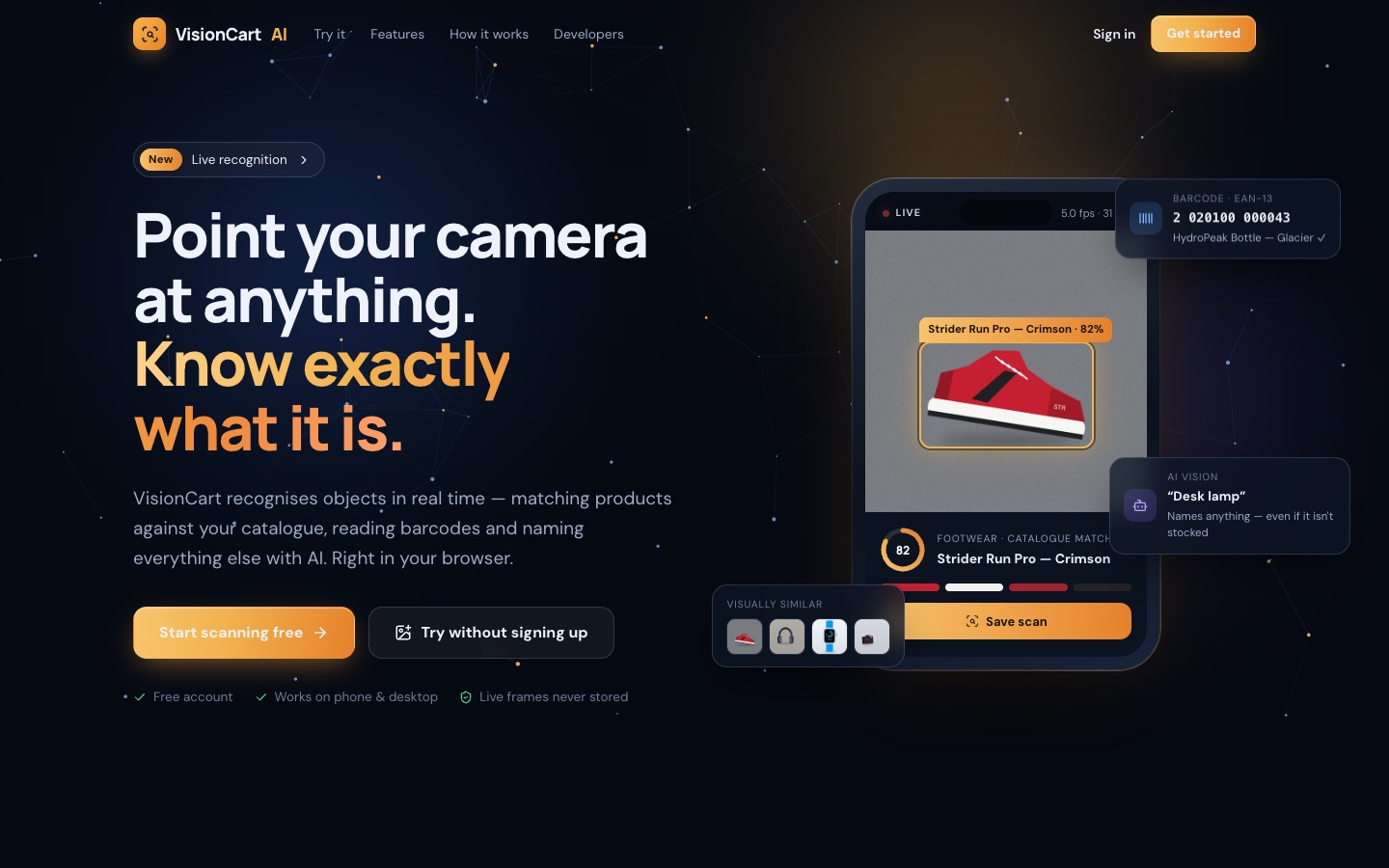
A product recognition platform that finds the object in a photo or live camera feed, describes it as a 527-dimension visual embedding, reads barcodes and optionally asks Gemini to read brands and printed text — then fuses every signal into one calibrated match score against a catalogue.
My role. Full-stack developer, 2026. The project is complete and documented below.
Finding a product from a photo usually means typing guesses into a search box. Pure image similarity is easily fooled by lighting, angle and background, and raw similarity scores look like confidence when they aren’t.
A scanner that matches a photo to the right catalogue product in milliseconds, shows a calibrated high, medium or low confidence with the reasons behind it, and works live at about five predictions a second.
Key features
- 01Live camera recognition at about 5 predictions a second
- 02527-d visual embedding with object localisation and cropping
- 03Barcode decoding (EAN-13, UPC-A, EAN-8) and optional Gemini vision
- 04Calibrated confidence with a per-signal breakdown and reasons
- 05Catalogue with faceted search, shop-by-colour and search by image
- 06Developer API with scoped keys and quotas, plus an admin console
The constraint#
Recognising a product from a phone photo is harder than it looks. The same sneaker on concrete, on a table or half in shadow produces very different pixels, and a cosine similarity of 0.8 means nothing to a shopper. The system has to be fast enough to run live, honest about how sure it is, and useful even when the item isn’t in the catalogue.
What I built#
Three services: a React app, an Express + MongoDB API, and a Python FastAPI service that does the vision work. The browser only ever talks to the API; the API calls the AI service with a shared secret.
- Localise, then describe. The object is found and cropped before matching, then described as a 527-dimension vector from colour, spatial colour, gradient (HOG), texture (LBP) and silhouette features — about 50 ms on a CPU with no model downloads.
- Several signals, one score. EAN-13, UPC-A and EAN-8 barcodes are decoded in pure numpy, and optional Gemini vision returns schema-validated JSON with brand, model and printed text. Everything is fused into a single ranking, and an exact barcode beats everything.
- Calibrated confidence. Scores are normalised against the catalogue’s own similarity distribution and labelled high, medium or low, with a per-signal breakdown.
- Live scan. About five predictions a second, a tracking box that follows the object, and matches smoothed across frames. Gemini is called only when the scene changes and the camera holds still, and frames are never stored.
- A real platform around it. Async jobs with live progress over Server-Sent Events, a catalogue with faceted search and shop-by-colour, a developer API with scoped keys and quotas, and an admin console with analytics and an audit log.
What was hard#
- Making a score mean something. Raw similarity is never shown as a probability; calibrating against the catalogue’s own distribution is what makes “high confidence” trustworthy.
- Live without waste. Re-calling an AI model on every frame would be slow and costly, so it only runs when the scene changes and the camera is steady.
- Learning from feedback. A confirmed scan is added to the visual index, so similar photos match better next time.
- Security. Rotating refresh tokens that revoke the whole session on replay, magic-byte upload checks and CSV formula-injection guards.
What I’d do differently#
Swap the hand-built descriptors for a small learned embedding model once there is enough confirmed scan data to evaluate it against.
Screenshots